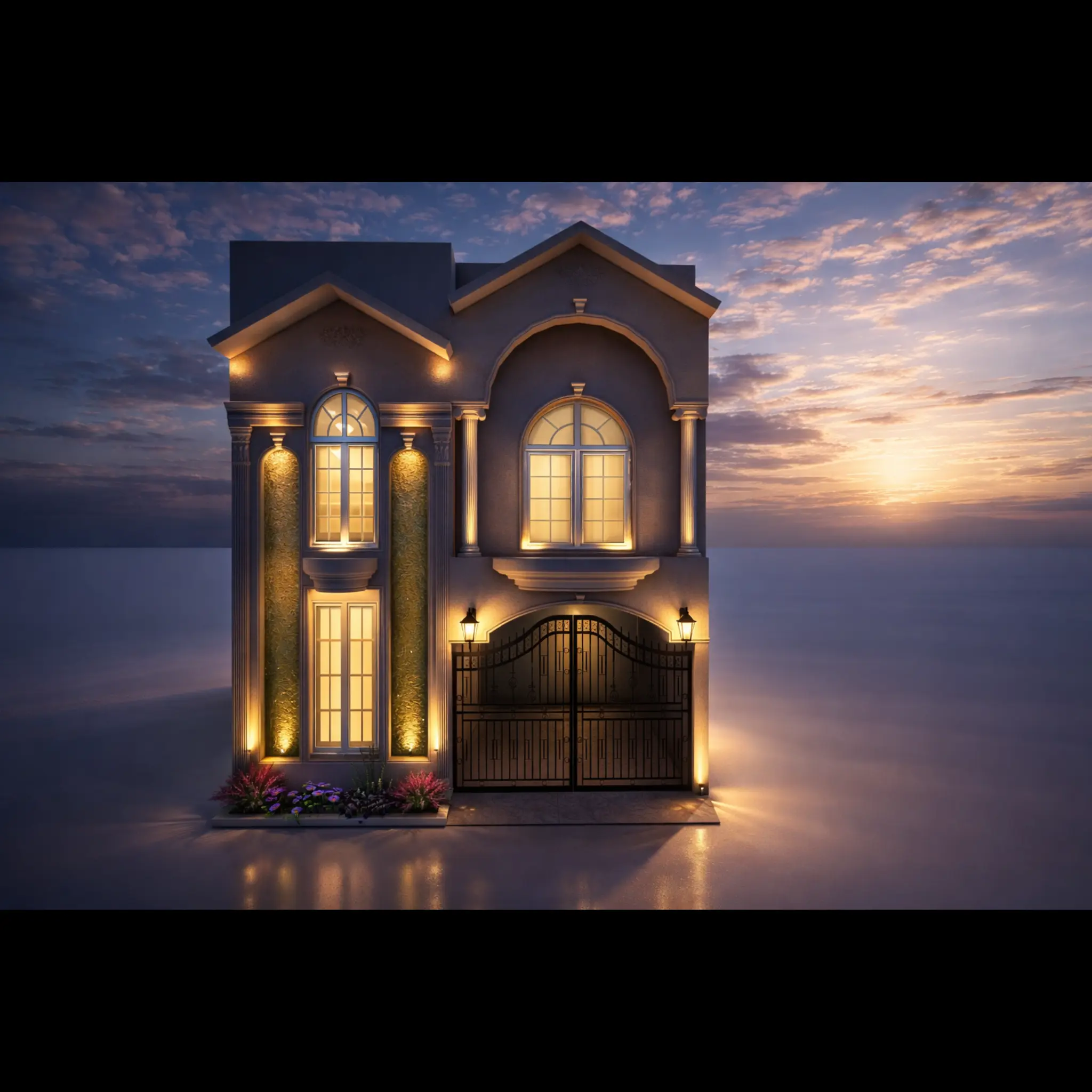
25 Feet Wide Modern House Front Elevation | 5 Marla Design | Architect in Gujranwala
The front elevation of this house is designed in a Spanish architectural style for a 5 marla residential plot with a 25 feet wide frontage in Qila Didar Singh. Spanish style architecture is known for its warm appearance, elegant simplicity, and timeless character, making it a perfect choice for residential homes. This elevation is designed to look attractive, welcoming, and durable while staying practical for everyday living. Designing a Spanish style elevation on a narrow 25-foot-wide plot requires careful control of proportions and detailing. The aim was to create an elevation that does not feel crowded, even with traditional elements, and at the same time reflects the charm and richness of Spanish architecture. Overall Design Concept The main idea behind this elevation is to bring a warm and classic Spanish feel using simple architectural elements instead of heavy ornamentation. Spanish architecture focuses more on textures, depth, arches, and earthy tones rather than modern sharp lines. This approach makes the house look elegant and long-lasting. The elevation is designed to be balanced and symmetrical, which is very important for narrow frontages. Proper alignment of windows, balcony, and projections ensures that the house looks well-organized and visually pleasing from the street. Use of Arches and Curves One of the most important features of Spanish style architecture is the use of arches. In this elevation, arches are carefully incorporated in the balcony area and window openings. These arches soften the overall look of the façade and give it a traditional yet graceful appearance. Arches also help in breaking the straight vertical lines of the elevation, which is especially useful in a 25-foot-wide house. They add character and depth without increasing construction complexity. Balcony Design in Spanish Style The first-floor balcony is a key focal point of this elevation. It is designed with arched openings and solid proportions, which are typical features of Spanish homes. The balcony not only enhances the beauty of the elevation but also provides shade to the lower floor and protection from rain and sunlight. The balcony railing design is kept simple and solid, avoiding excessive detailing. This maintains the traditional Spanish look while keeping construction practical and budget-friendly. Color Palette and Textures Spanish style elevations are known for their warm and earthy colors. For this house, the color palette is inspired by natural tones, such as light beige, cream, off-white, and subtle brown shades. These colors give the house a calm and welcoming appearance. Textures play a very important role in this elevation. Instead of flat surfaces everywhere, textured plaster finishes are used to add depth and richness. These textures enhance the visual appeal of the elevation and help hide minor wear and tear over time, which is ideal for long-term residential use. Windows and Openings Windows are designed to suit both aesthetic and functional needs. In Spanish architecture, windows are usually simple but well-proportioned. In this elevation, window sizes and placements are carefully planned to allow maximum natural light and ventilation while maintaining privacy. The alignment of windows is kept clean and symmetrical. This helps maintain balance on the narrow frontage and avoids a cluttered appearance. Window shades and small projections are also included to add depth and shadow effects to the elevation. Roof Elements and Projections Spanish style homes often feature strong horizontal elements and subtle roof projections. In this elevation, slab projections and chajjas are designed to provide shade and visual layering. These elements help create a play of light and shadow, which enhances the overall appearance of the house throughout the day. Even though the plot width is limited, these projections are carefully controlled so the elevation does not look heavy or overdone. Material Selection and Practicality All materials used in this elevation are chosen keeping local construction practices and budget in mind. The design avoids expensive or hard-to-maintain materials. Instead, it relies on: Plaster finishes Simple moldings Natural color tones Straightforward construction techniques This makes the Spanish style elevation suitable for Qila Didar Singh’s climate and residential environment. The elevation is easy to maintain and ages well over time. Street Presence and Visual Impact From the street, this Spanish style elevation creates a strong and welcoming presence. The arches, textures, and warm colors immediately give a sense of character and quality. Even with a 25-foot frontage, the house stands out due to its well-balanced design rather than excessive decoration. The elevation blends well with neighboring houses while still maintaining its unique identity. This is an important factor in residential areas where harmony with surroundings matters. Why Spanish Style Works for 5 Marla Houses Spanish architecture is especially suitable for small and medium-sized residential plots like 5 marla. It allows designers to create visually rich elevations without relying on large widths or heights. The focus on proportions, arches, and textures makes the house look elegant even on a compact plot. For homeowners in Qila Didar Singh who want a classic, timeless, and warm-looking home, Spanish style is an excellent choice. Conclusion This Spanish style front elevation for a 5 marla, 25-feet wide house in Qila Didar Singh is designed with a perfect balance of beauty, tradition, and practicality. The elevation reflects a timeless architectural language while remaining easy to build and maintain. At Naqsha Wala, our goal with this elevation was to deliver a design that looks elegant today and remains attractive for many years to come. This Spanish style façade adds value to the house, enhances street appeal, and provides a comfortable and visually pleasing living environment.
Project completed on February 19, 2026